Brazilian Jiu-Jitsu is martial art combat system that focuses on grappling and especially ground fighting. Brazilian Jiu-Jitsu was formed from Kodokan judo ground fighting fundamentals that were taught by a number of individuals including Takeo Yano, Mitsuyo Maeda, and Soshihiro Satake.
Brazilian Jiu-Jitsu eventually came to be its own art through the experiments, practices, and adaptation of Judo through Carlos and Helio Gracie as well as other instructors and
years later is still being utilized by nearly every mixed martial artist on every level and is a staple in most military and police force self-defense as well as situational diffusion curriculums.
However; how important is this aspect of police training? Is this incorporation of martial arts really necessary for those defending our freedom and protecting our safety? The answer is without a doubt it most certainly is as evidence by the video below.

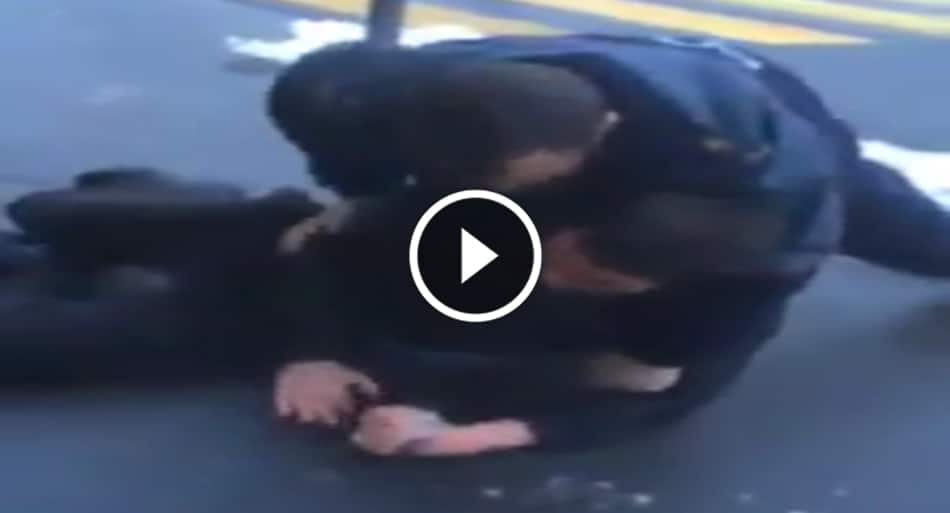
What we are witnessing in the video below is the attempted apprehension of a suspected criminal by a Swiss police officer. Although the techniques being employed are unorthodox, to say the least, they are none the less effective.
It is clearly evident that the police officer paid attention during the Jiu-Jitsu portion of his police training as the level of control being displayed is unbelievable. An interesting aspect of the art is just that…it is an art.
Jiu-Jitsu allows for the practitioner to be shown a move or sequence of moves and then adapt them based on their own individual size, strength, and flexibility thus providing nearly infinite variations to any move that is learned.
Check out the video below to see one police officer’s very weird variation of Jiu-Jitsu positioning.
Jacob C. Stevens is a lifelong athlete and cerebral martial arts enthusiast who is also skilled in the art of linguistic manipulation, his published work, Afterthoughts and Handgrenades, can be found here…