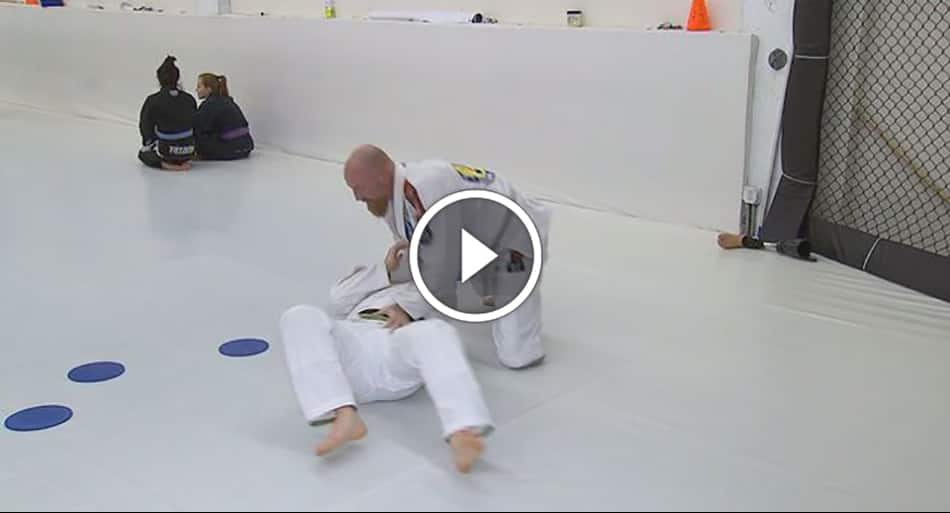
Brazilian Jiu Jitsu is more than just a martial art, but it is also a way of life. Former Army veteran Ronald Mann lost part of his leg in a motorcycle accident back in 1995 and for a brief moment things almost took an even worse turn.
Thirty days after the accident, I had a gun to my head. And just before I pulled the trigger, I decided I was not going to quit. If I was going to die, I was going to die fighting.
Fortunately for Ronald he discovered Brazilian Jiu Jitsu which allowed him a way out of his depression and a renewed focus on life, but it was still not without its challenges.

When I first started training, I wasn’t allowed to train in most gyms. They turned me away.”
Years late Ronald would claim victory in an MMA fight with his prosthetic leg and more recently traveled to Abu Dhabi and medaled gold in the World Para Jiu Jitsu festival without his prosthetic leg.
“There are advantages. You can’t ankle lock me. I don’t have an ankle on that side. There are disadvantages. I can’t block the guard attacks from that side. I’m not able to sweep from that side.
Humble in victory Ronald realizes things could have been vastly different twenty years ago.
“Without this, I don’t know where I would have ended up. With Jiu-Jitsu, I’m a world champion”
Brazilian Jiu Jitsuis a martial art system that focuses on grappling with a specialty in ground fighting. BJJ promotes the concept that a smaller, weaker person can successfully defend against a bigger, stronger, heavier assailant by using proper technique, leverage, and most notably, taking the fight to the ground, and then applying joint-locks and chokeholds to defeat the opponent. BJJ training can be used for sport grappling tournaments as well as self-defense situations.[Source: Wiki]
Author: Nic is a designer and illustrator alongside being a martial arts enthusiast. You can find some of his illustrative work for purchase here.