While competition Judo rules prohibit striking, the governing body for Judo, the Kodokan, does recognize six kicks and 17 strikes with the arm, including multiple chops.
In the 1950s, karate schools were nearly non existent, but Judo dojo were proliferating. Thus in the public eye Judo became a catch all term for Asian martial arts.
For example, the Judo Chop was the signature move of pro wrestler Mr. Moto (real name McRonald Kamaka). And the move appeared repeatedly in the beloved Peanuts comic strip.

In the 1970s, Bruce Lee inspired an explosion in interest in Asian martial arts, and the Judo Chop came to be called more accurately a Karate chop. Breaking demonstrations abounded, impressing impressionable audiences.
Few items from Home Depot were safe, including …

… bricks
… ice, and
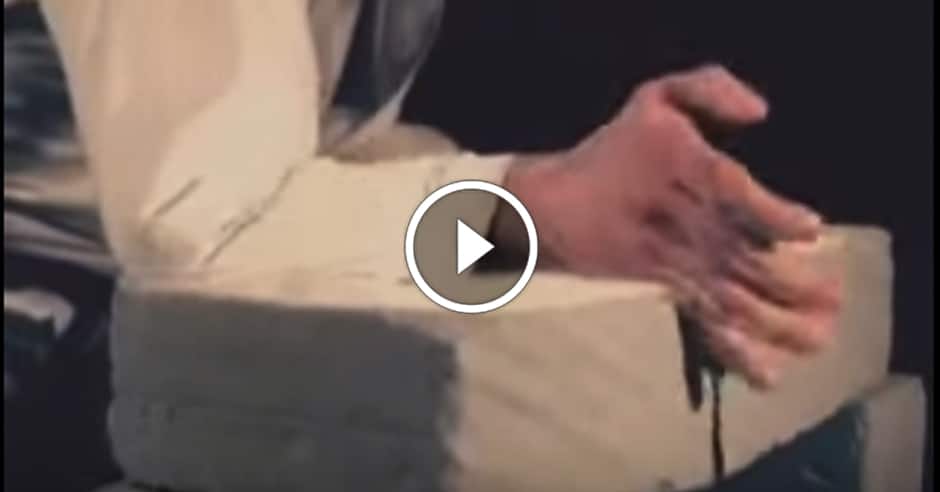
Breaks take place at maximum velocity, so it is impossible to discern exactly what happens. However, thanks to high speed film, we can now all see it, and it’s a little freaky.
A silly as breaking is, a chop to the neck can have a significant effect. The technical term for it is a Brachial Stun. It is the reason one of the primary targets in Muay Thai is a high kick to the side of the neck.
A previous version of the U.S. Army Field Manual on combatives (FM 21-150) describes it ably.
A sharp blow to the side of the neck causes unconsciousness by shock to the carotid artery, jugular vein, and vagus nerve. For maximum effect, the blow should be focused below and slightly in front of the ear. A less powerful blow causes involuntary muscle spasms and intense pain. The side of the neck is one of the best targets to use to drop an opponent immediately or to disable him temporarily to finish him later.
While the chop itself is not deadly, any number of tragic cases illustrate that being knocked out from standing can be lethal from the head hitting the floor. So as always, only use martial arts for sport under controlled circumstances, or in self-defense, where there is no alternative.