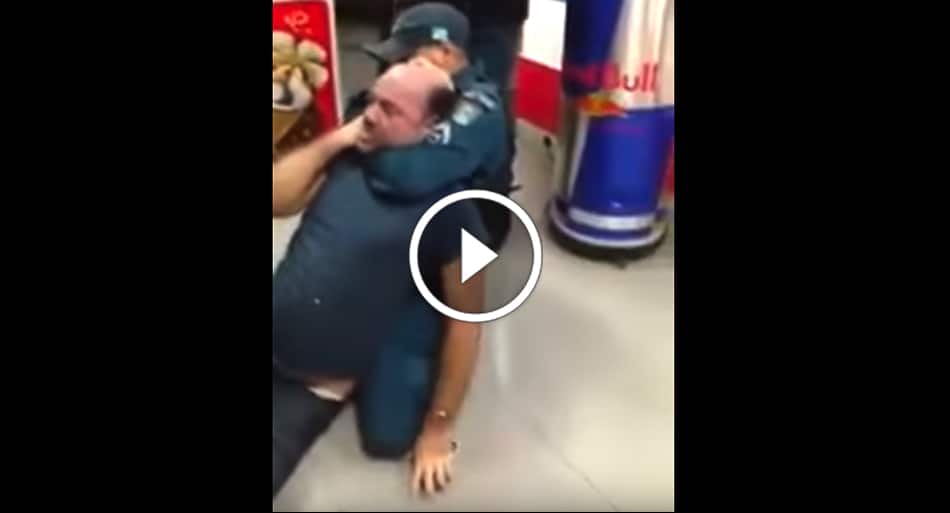
This video begins with a struggle already in progress between two members of Brazil’s Polícia Militar and a male suspect. The man is latched onto the bottom of a display with one hand, and is resisting attempts to control his other hand, making it difficult for the two officers to get him into handcuffs.
American police are typically given only a few options in these scenarios. They are taught very watered down, narrowly applicable versions of some basic joint locks. Chief among these are some leverage and pain compliance techniques utilizing shoulder, arm and wrist locks.
When these fail, the only other option they are trained in is the application of less-lethal weaponry like the baton, pepper spray or Taser. These methods often create controversy, particularly when the suspect they are being used against is merely resisting and not actively attacking the officer.
The problem though, is a police officer runs the risk of injury or a sudden escalation on the part of the suspect if he remains in a prolonged grappling encounter with a suspect. To end these quickly and efficiently requires training and experience.
This officer obviously has both.
As soon as it is clear that attempts to control the suspect’s hands are failing, he immediately sinks in a tight rear naked choke. The purists (not the realists) out there may cry foul, thinking to themselves Where are your hooks at, you no stripe white belt!?
But if we look at the application, against an untrained opponent, particularly with backup available, the hooks (legs wrapped around the waist and inside the legs) are obviously not necessary.
This officer held the choke until the exact moment the suspect passes out, and immediately moves to cuff him. The suspect even wakes up right on cue as the handcuffing is complete. The timing was perfect and the application of this technique involved no emotion and no malice.

You can even measure his poise and experience by the positioning on the ground of the unconscious suspect: turned slightly to one side, with the officer’s knees pinning him, but no force applied directly to the spine. This positioning is the correct method, as opposed what is sometimes seen with pressure applied right in the center at the spine, or across the neck of a suspect who is completely flat on his chest or stomach.
Correctly applied, a rear naked choke (or carotid restraint) is a relatively safe, low risk, less-lethal alternative. This would require the officer who is applying it to be trained and experienced, and a populace that is comfortable with it and educated in the facts related to the use of this powerful technique.
“>
Mike Pesesko is a personal trainer, martial artist, self-defense enthusiast, veteran police officer and writer who has put more than a few suspects to sleep. You can hire him to make you less fat or less likely to get your ass kicked at rkmtraining.com.