In a long report in the Korea Times, the international rise of Taekwondo, and its popular decline in Korea is detailed, alongside the rise of MMA worldwide,
Oddly, Taekwondo , this most Korean activity has Japanese antecedents. By the mid-20th century, Korea’s traditional martial art, taekkyun — a folk sport frequently practiced alongside ssireum, or traditional Korean wrestling — was within one practitioner of extinction.
However, during the 1910-1945 colonial era, a number of Koreans had studied Japanese karate — itself, originally an Okinawan import. The most famous of these men, Choi Bae-dal changed his name to Oyama Masutatsu and remained in Japan, where he founded the famous Kyokushin system of karate.
But others taught in Korea, in their schools, or kwan. The arts practiced within were variously named kongsudo, taesudo and tangsoodo. It has been claimed by some that there was influence from traditional Korean styles, but the last living taekkyun master, Song Duk-ki, had no relationship with any of the original kwan. The masters of all had studied karate (though one had also studied kung fu) and the material taught was identical to karate in terms of uniforms, training methods and techniques
After the Korean War, the major kwan expanded to nine and in 1955, they met under the headship of Gen. Choi Hong-hi, who had instituted martial arts practice in military training, and agreed to coalesce under a new name suggested by Choi: taekwondo.
Taekwondo had government backing, but its Japanese origins did not sit well with a people who harbored sour memories of harsh colonial rule. So taekwondo was Koreanized: local terminology was adopted, a code of conduct written and the national flag emblazoned across uniforms and training halls. A long history was tacked on to the art, tracing taekwondo to the near-mythical warriors of the Goguryeo and Silla Kingdoms, while making little or no reference to Japanese influence.
From the late 1960s onward, taekwondo began to change. Either consciously or unconsciously, taekwondo began to mirror taekkyun (which Choi, who had not founded one of the first kwan, had studied prior to learning karate) in its emphasis on kicks. Taekwondo masters developed a wide range of powerful thrusting, spinning and jumping kicks. And Koreans pioneered full-contact fighting competitions — a development rejected by Japanese karate organizations, who believed, erroneously, that their skills were too deadly to use full-force. (The only Japanese school which promoted full contact was led by the Korean, Choi/Oyama.) In light of combat experience, changes were made to both training methods and techniques. Taekwondo began to move from a martial art to a combat sport.
While U.S. troops in Japan and Okinawa studied karate, GIs in Vietnam and Korea studied taekwondo. But Tokyo was pushing Japanese judo, not Okinawan karate as a global sport, while Seoul promoted taekwondo through the International Taekwondo Federation (ITF), founded in 1966 under Choi’s headship. Under this program, instructors were dispatched abroad to promote the newly organized and rapidly sportifying art.
In the early 1970s, Asian martial arts entered the Western world’s cultural mainstream thanks to the chop-socky thrillers of Bruce Lee and David Carradine’s Kung Fu television show. Although both Lee and Carradine espoused Chinese martial arts, kung fu teachers in the West were secretive, split between scores of different (and often esoteric) sub-styles, and lacked an overall organizational body.
The Koreans, on the other hand, were organized, visible, hard-working and more than willing to teach the Western public. In addition to their fearsome post-Vietnam War reputation as the Prussians of Asia, avuncular masters like Jhoon Rhee promoted their art as a useful disciplinary and educational endeavor for children. And Korean taekwondo, with its arsenal of high, spinning and jumping kicks, was perfectly placed to catch the eye of a public for whom Asian martial arts tended to mean high kicking.
Soon, almost every American town had a taekwondo studio in its mall or main street, and martial artists nation- and soon world-wide either learned taekwondo or borrowed its kicks, which became popular weapons at cross-style martial arts tourneys.
In 1973, Bruce Lee died. With martial arts movies storming global box offices, the question was who would fill his shoes. It fell to a Korean stylist to become the next global martial arts superstar: Chuck Norris, an all-American martial arts champion who had learned his kicks while stationed at Osan Airbase. Battling drug dealers, Viet Cong and terrorists, Norris emblazoned Korean kicks across popular culture.
To look again at taekwondo in business terms: the U.S. led global trends and success there enabled success anywhere. Taekwondo went global, disseminated by hard-working expatriate teams of Korean instructors, dispatched by the head office in Seoul, the global brand headquarters. But there was one multinational marketing platform for taekwondo still to capture: the Olympics.
Kim Un-yong, who would leapfrog from WTF head to vice president of the International Olympic Committee (IOC), successfully lobbied to have WTF taekwondo included in the 1984 Asian Games, then the 1988 Summer Olympics, where it was a demonstration sport in Seoul. In 2000, it became a full medal sport in Sydney.
Taekwondo became perhaps the world’s most popular martial art.
—
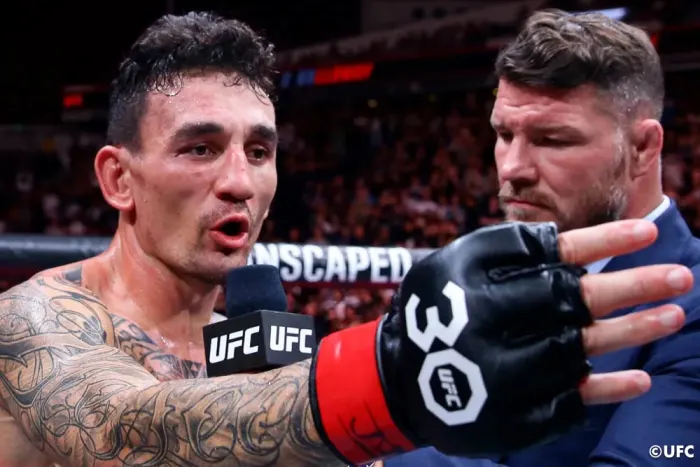
Taekwondo of the 21st century, like its Asian cousins karate and kung fu, is facing a new challenge in the global arena. Mixed martial arts competition, or MMA, has proven a massive hit with global television audiences, making it the first combat sport since pro boxing to succeed as mass entertainment.
Moreover, the broad technical range and no-holds-barred rule-set of MMA arguably makes it more effective as a fighting system than style-specific martial arts such as judo, taekwondo, karate and kung fu, none of which have won significant audiences beyond their own circles of practitioners. How Asian martial arts will be impacted by MMA in the long-term remains unclear.
Although the current WTF president, the respected academic Dr. Choue Chung-won, eagerly promotes the art’s internationalization — he once noted his pleasure at seeing a demonstration mixing taekwondo and tango — South Korean flags continue to be saluted in taekwondo training halls and sewn on taekwondo uniforms worldwide. It is hard to think of another Olympic sport that so closely binds itself to its country of origin.
And at home, its catchment pool may be dwindling. In the 1960s, 70s and early 80s, Korean taekwondo practitioners were hardcore martial artists in an era when few other extra-curricular activities were available. As growing prosperity makes young Koreans less hardy, ever-increasing leisure options create competition for martial arts.
Today, outside the military PT curriculum and pro-athletic training at sports universities, Korean taekwondo is almost exclusively the province of children. And with regular grade tests being taken by thousands, the once-vaunted black belt has lost its mystique.
Moreover, as of this November, Korea’s Cultural Heritage Committee has recommended taekkyun be listed as a UNESCO living cultural heritage. In a truly remarkable renaissance, the ancient martial art survived Song’s death in 1987. His students oversaw the art surging in popularity in the 1990s, mainly on university campuses. Today, even to the layman’s eyes, it is easy to distinguish between it and taekwondo. An official designation recognizing taekkyun, not taekwondo, as Korea’s traditional martial art, drives a further nail into the latter’s dubious history.
So taekwondo stands at a crossroads. Will it secure a full-time Olympic slot or not? Is it a martial art for adults, a combat sport for athletes, or an educational activity for children? Is it traditional or modern? Is it Korean or international?
Arguably, it is now deep and broad enough to be all the above, for the art’s astonishing global popularization mirrors Korea’s astonishing national ascent — the greatest national success story of the 20th century. However — like the peninsula — it remains divided among different governing bodies, with their own forms and competitive systems.