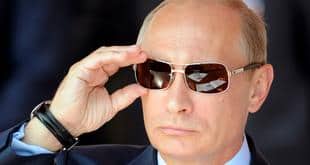
Ilan Berman is one of the U.S.’s leading experts on the Middle East and Iran. The vice president of the conservative American Foreign Policy Council think tank in Washington, DC. is also an avid martial artist. In his latest article for the influential Foreign Affairs magazine, Berman argues that Russian president Vladimir Putin is using martial arts generally and mixed martial arts in particular as a vehicle to further his nation’s foreign policy.
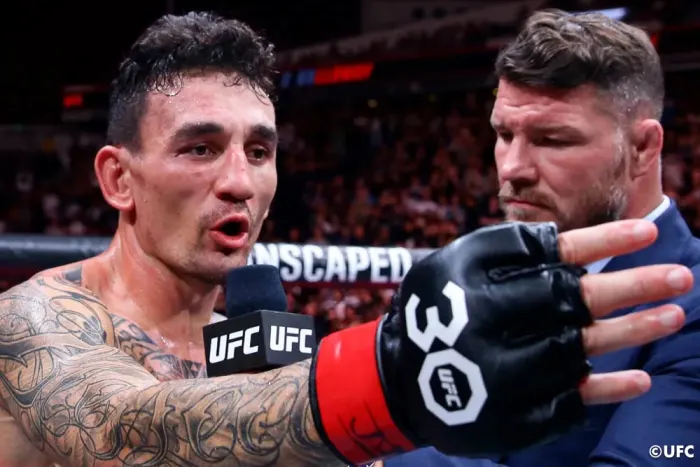
UFC middleweight champion Chris Weidman, former heavyweight interim champion Frank Mir, and current interim heavyweight champion Fabricio Werdum were recently guests in Grozy, Chechenya, at the Akhmat MMA event. The promotion is named for the assassinated Chechen leader Akhmad Kadyrov, whose son Ramzan now runs the nation. The Kadyrovs have long been allied with Putin’s Russia. Berman ties that visit to the Kremlin.
But it’s hard not to see the event’s political subtext: mixed martial arts has become a way for the increasingly isolated Russia to interact with the rest of the world. The Kremlin’s intervention in Ukraine has made it unpopular in Europe, and the West’s response, including several rounds of U.S. and European Union sanctions, has hit Russia hard. More than $150 billion fled the Russian Federation last year. The Russian government has estimated that this year capital flight might total as much as $250 billion. Most of the major credit agencies have downgraded the country’s debt to “junk” status. And Russia’s Central Bank now predicts that the national economy could contract by nearly six percent this year.
Diplomatically, meanwhile, Russia is increasingly sequestered. Over the past year, it has been ejected from the G-8 and suspended from joining the Organization for Economic Cooperation and Development. Russian President Vladimir Putin’s premier economic and political project, the Eurasian Economic Union, now stands on the verge of collapse. The assassination of opposition leader Boris Nemtsov, in Moscow, in late February—a crime widely attributed to the Kremlin, despite official protestations to the contrary—has only reinforced the Russian government’s pariah status in the eyes of the world.
In this atmosphere, sports have once again emerged as a tool of diplomacy. During the Cold War, the Soviet Union used sports in general, and hockey in particular, to interact with the world despite its global isolation. This time, the language is mixed martial arts, the planet’s fastest-growing sport, and the message is clear: despite Western sanctions, Russia is still very much a global contender.
Weidman and his associates are hardly the first martial artists to be feted by Moscow in this way. The 1980s American film star and aikido black belt Steven Seagal has cut a public figure over the past several years as a guest of Kadyrov’s administration in Chechnya and as a public supporter of Putin. The connection is understandable: Kadyrov is widely known to be an aficionado of the fighting arts, and Putin is himself a black belt in judo. But it is also intensely political. Because of his contacts in the Kremlin, Seagal has become an intermediary, of sorts, between Russia and the U.S. Congress and has gained notoriety as an apologist for the Russian government.
That’s a role the 62-year-old actor seems comfortable playing. In a March 2014 interview with the Russian newspaper Rossiyskaya Gazeta, Seagal waxed enthusiastic about Putin’s policies in Crimea, which he deemed very reasonable, and confided that he considers the Russian strongman to be like a brother.
Today’s fighting superstars, however, might not be quite so sanguine if they knew that Moscow was using them to send a political statement. Perhaps someone might want to let them in on the bigger picture.
Seagal is of course a somewhat boyishly handsome action film star, musician, philanthropist, environmentalist, animal rights activist, producer, writer, guitarist, reserve deputy sheriff, and 7th-dan black belt in Aikido.
Below the noble and dignified international emmisary Fritão, as he is affectionately known among his Brazilian students like Anderson Silva and Lyoto Machida, at work on international diplomacy in Chechenya: