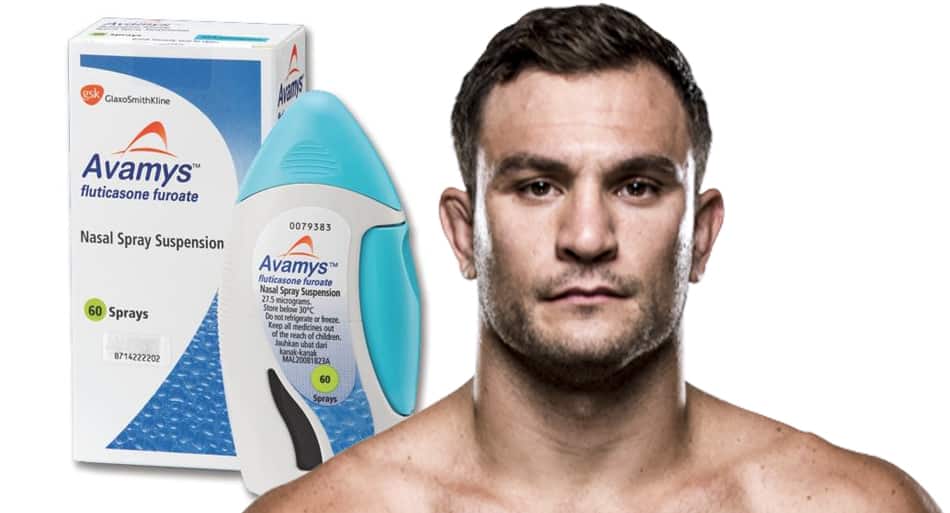
UFC light heavyweight Gian Villante failed an anti-doping test last month, but it was not announced, and, following a retroactive Therapeutic Use Exemption, the fighter will not be sanctioned.
Via UFC.USADA.ORG.
USADA announced today that UFC athlete Gian Villante, of Long Beach, N.Y., has been granted a retroactive Therapeutic Use Exemption (TUE) and will therefore not face an anti-doping policy violation for disclosing the use of an inhaler, which contains a prohibited substance as an active ingredient, and testing positive for that prohibited active ingredient. This announcement is being made because the issuance of the retroactive TUE resolves a potential anti-doping policy violation.
Villante, 31, declared the use of a Breo Ellipta (fluticasone furoate/vilanterol) inhaler during an out-of-competition urine test conducted on January 18, 2017, and subsequently tested positive for vilanterol. Vilanterol is a prohibited substance in the category of Beta-2 Agonists and is prohibited at all times under the UFC Anti-Doping Policy, which has adopted the World Anti-Doping Agency (WADA) Prohibited List.
Following his disclosure, USADA advised Villante that absent a valid TUE, the use of the inhaler was prohibited under the UFC Anti-Doping Policy. Thereafter, Villante submitted a TUE application documenting that his physician prescribed a 14-day course of the inhaler to treat conditions associated with airflow restriction and asthma.
Upon a thorough investigation into the circumstances surrounding Villante’s use of vilanterol, which included the retroactive TUE application process, USADA determined that the athlete had an unequivocally diagnosed acute medical condition for which the use of vilanterol is consistent with the standard of care. Further, it was determined that the short-term use of the Breo Ellipta inhaler was within the manufacturer’s therapeutic recommendation and was intended to return the athlete to a normal state of health without providing a performance-enhancing benefit. Finally, other permitted therapeutic alternatives were not successful at controlling the athlete’s condition.
Because Villante’s TUE application was granted retroactively, his declaration of a prohibited substance and his subsequent positive test will not result in an anti-doping policy violation. Accordingly, Villante remains eligible to compete on the UFC Fight Night Card in Fortaleza, Brazil, on March 11, 2017.
UFC vice president of athlete health and performance Jeff Novitzky told Marc Raimondi for MMA Fighting why the flagged test was not previously announced.
“It immediately appeared he had a legitimate medical use for the substance and UFC wanted the TUE process to play out in fairness to Villante before the public announcement,” said Novitzky. Decisions on immediate UFC disclosures of potential violations are made on a case-by-case basis, balancing transparency and the fairness to the athlete in each case.”
Villante now becomes the second fighter to be extended a retroactive TUE, after Cris Cyborg.