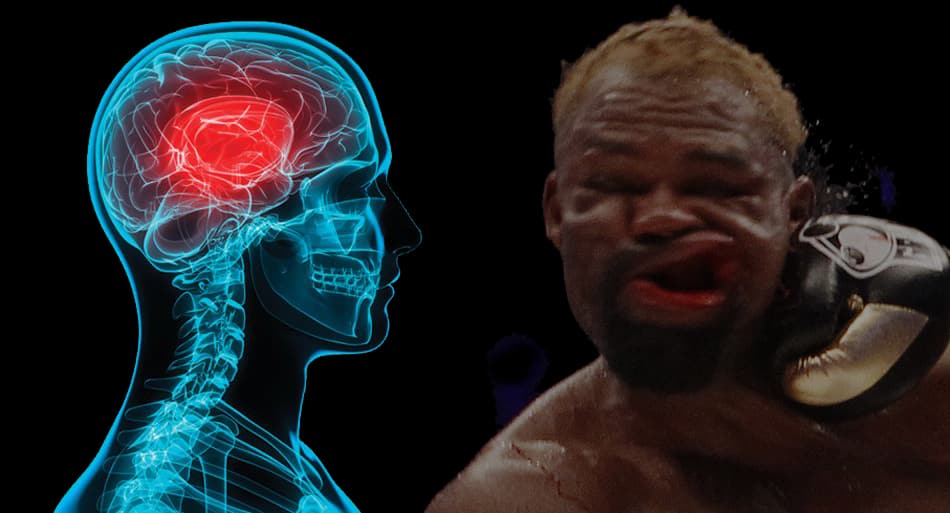
The Association of Ringside Physicians has called for suspensions and examinations for fighters who get KOed, in an attempt to provide adequate time to recover. Titled Concussion management in combat sports: consensus statement from the Association of Ringside Physicians, the paper is must-read for anyone concerned with health and safety in combat sports. Two critical aspects of it are suggested minimum supensions and a return to work protocol.
Suspensions and concussion management
•If a fighter is exhibiting signs of a concussion during a bout, the fight should be stopped. These signs include but are not limited to headache, confusion, blurred/double vision, nausea/vomiting and balance/gait
•If a combat sports athlete sustains a TKO secondary to blows to the head, it is recommended that he or she be suspended from competition for a minimum of 30 days. It is also recommended that the fighter refrain from sparring for 30 days as well.
•If a combat sports athlete sustains a KO without loss of consciousness (LOC) secondary to blows to the head, it is recommended that he or she be suspended from competition for a minimum of 60 days. It is also recommended that the fighter refrain from sparring for 60 days as well.
•If a combat sports athlete sustains a KO with LOC secondary to blows to the head, it is recommended that he or she be suspended from competition for a minimum of 90 days. It is also recommended that the fighter refrain from sparring for 90 days as well.
•All combat sports athletes, including the winners, should be evaluated for signs and symptoms of concussion postbout. Evaluation should be performed immediately postbout ringside but also later repeated.
Table 2 Return to fighting protocol
Phase 1: Return to general fitness
•Step 1
Light aerobic activity – Stationary biking and elliptical, incline walking: gradually escalating heart rate and monitoring through perceived exertion and/or HRM.
•Step 2
Moderate aerobic activity – Jogging, swimming: escalating heart rate to
moderate and high-demand activity through HRM or perceived exertion; assess high-level
vestibular functioning.
•Step 3
Sport-specific activity Sprinting, mitts, bag/footwork, walk-through grappling and so on; increasing duration; no partner work. Begin resistance training.
Phase 2: Return to non-contact fighting activities
•Step 1
Bag/mitt work with movement – Tests fighter ability to punch and/or kick in
multiple planes while testing vestibular and visual systems.
•Step 2
Shadow boxing/drills Reintroduces fighter to sport environment and re-establishes footwork in ring parameter and surface.
•Step 3
One-sided sparring and grappling – Fighter begins to spar without the concern of
contact. Reacts to opponent’s movements and begins to get timing back for punches, kicks
and body position.
Phase 3: Return to contact/sparring fighting activities – May only advance to this phase when concussion symptoms have completely resolved
•Step 1 Sparring: short duration
First step of live sparring. Rounds of short duration with long breaks. Number of rounds is small to begin with and then can increase as tolerated.
•Step 2 Sparring: longer duration
Rounds at this step begin to lengthen in duration while breaks between rounds shortens. Number of rounds can also increase as fatigue allows.
•Step 3 Sparring: normal parameters
Full return to normal training. Return to normal rounds and time limits based on sport and
next potential bout. Fighter should be able to tolerate normal parameters of training/sparring and is training as normal without a return of symptoms.
An initial period of 1 week should occur prior to beginning phase 1.