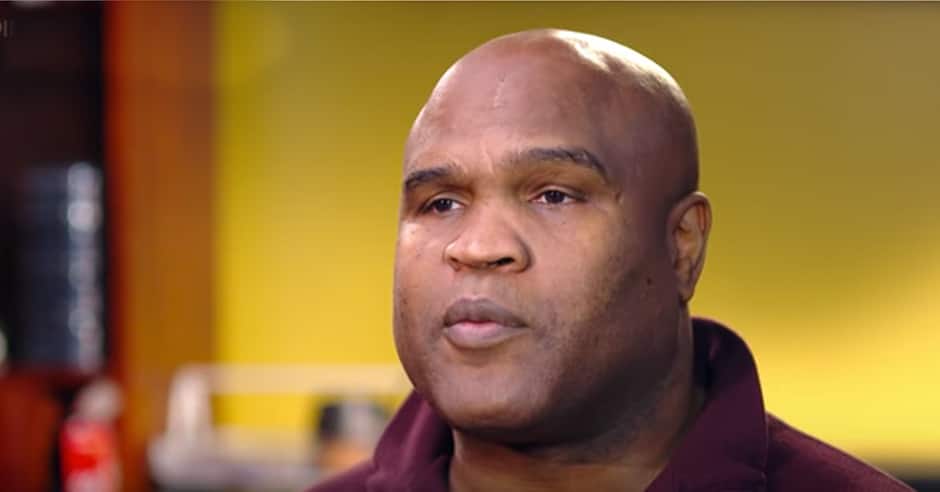
British Columbia litigation lawyer and combat sports law consultant Erik Magraken comments on “Big Daddy” Gary Goodridge, and his struggle with Chronic Traumatic Encephalopathy (CTE).
The risks of long term brain injury for athletes who choose a career in MMA and other combat sports is a reality. Depression is one of the symptoms of the disease, and Goodridge says that without medication, he would have committed suicide.
While Magraken’s Combat Sports Law blog spends much time summarizing scientific literature addressing these risks, a personal story is far more persuasive than data and statistics.
Goodridge’s life, highlights the harsh reality of living with CTE. It’s a sad reality for Goodridge, and one that individuals considering a career in combative sports should seriously weigh when making the decision to compete or keep competing.
Goodridge was diagnosed with CTE and dementia back in 2012. Inside MMA’s correspondent Amy Dardashtian caught up with “Big Daddy” to see what a day in the life is like four years later.
The reality of Goodridge’s life today is sobering.
“I could get a job,” he explains. “But I would forget I had a job.”
Goodridge’s first MMA fight, at UFC 8, ended in devastating fashion for his opponent, wrestler Paul Hererra:
He came back that night and fought again, and won. And again that night he fought, finally losing to Don Frye. That was in 1999. He fought for the UFC more that year, and then went on to PRIDE, K-1 and a number of other organizations. For a decade and a half, Goodridge enjoyed an amazing career in combat sports, most notably as PRIDE’s gatekeeper.
He was willing to fight anyone anywhere, and he did, over the years facing the heaviest hands, and feet, in the history of the sport, including Fedor Emelianenko, Alistair Overeem, Igor Vovchanchyn, Pedro Rizzo, Marco Ruas, Mark Coleman, Gilbert Yvel, Heath Herring, Don Frye, and many more. Goodridge had some 85 MMA and kickboxing bouts in total.
Over and again he suffered this:

And delivered this:
And suffered this:
It is thrilling stuff. Goodridge earned pride, fans, and money, and he paid for it in the end with his health.
The fighter believes his years in kickboxing were when the majority of his brain damage occurred. A quick look at his kickboxing record lends some credence to the judgment. He lost twelve of his last 13 kickboxing matches. One was a draw. Three of the losses were via KO, three were via TKO, and six were decisions. But perhaps he took even more punishment in the decisions.
However, his MMA record at the end was not radically different, with four wins out of the final 13 fights. Of the nine losses in MMA, one was a KO, five were TKOs, one was a submission, and two were decisions.
Goodridge told the Orangeville Banner he believes a lot of the damage likely occurred as a result of him getting back into the ring too early following a concussion.
I had like three weeks in a row where I was knocked out two of the three weeks, he said. You built up brain injury after brain injury after brain injury by not giving it proper time to heal.
That’s not to say that if you were to give it time to heal, then it was going to go away.”
Goodridge says he wishes he knew then what he knows know.