When one thinks about established rules the simplicity of why such a rule is in place is often overlooked. At the core of every warning, rule, or caution lays a simple fact: the action being spoken of has occurred, normally with dire consequences, and we are learning from our mistakes as we proceed…this is why the constitution of the U.S. is fluid and allows for amendments. Next time you read a warning label and think to yourself that stating the obvious is ridiculous, just keep in mind that the reason that label is there is because someone, somewhere along the line, has made that mistake.

This fact is further extended into athletics and, as is the case with all regulated sporting events, the safety of the participants is, or should be, the number one priority and motivator behind all policies and regulations. The most glaringly evident example is fisticuffs being allowed in hockey. The underlying stream of thought is that it is better to let these guys engage in a physical altercation to relieve anger and frustration using their fists while on an unstable surface rather than taking the chance of someone taking their aggression out by hitting another player with a stick or slicing them with the blade of their skate. Likewise, mixed martial has regulations, rules, and policies in place to protect the participants at all times but given the nature of the sport this is a task that at times can seem insurmountable.
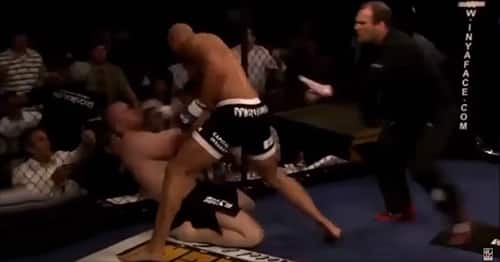
By nature, mixed martial arts is a very emotionally fueled sport and there are times when these emotions reach a point beyond control. What we witness below is what happens when emotional instability, aggression, and martial arts meet. Let it be known that none of this behavior is condoned nor does it represent the true sport of mixed martial arts.
“>
Jacob C. Stevens is a lifelong athlete and cerebral martial arts enthusiast who is also skilled in the art of linguistic manipulation, his published work, Afterthoughts and Handgrenades, can be found here.