The last sanctioned bareknuckle boxing match took place in 1889, between the great John L. Sullivan and Jake Kilrain. The practice was maintained in pockets across the planet, most famously among Irish Travelers.
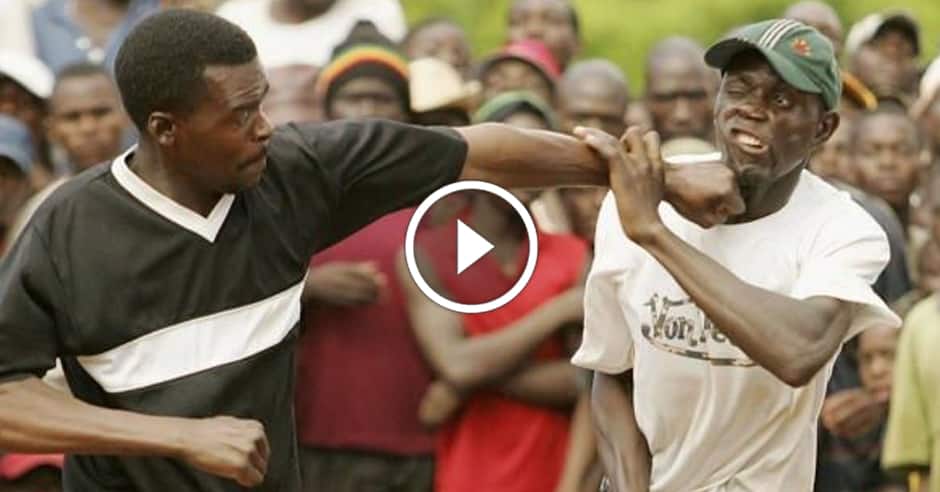
It has also taken place of hundreds of years in South Africa, where it is known as “Traditional Boxing.” As detailed in a BBC piece, it is known as “Musangwe” by the Venda people in northern South Africa, and has specific dictates.
There three rules to Musangwe.
•The fight stops when blood is shed.
•The fight stops when someone is knocked out
•The fight stops when one of the fighters raises his hand to signal surrender.
The youngest category, the “mambibi” consists of nine-to-12-year-olds, teens belong to the “rova” group and the over 18s are known as “ngwenya”, or crocodiles.
Those aged 35-45 are “seniors” and the few boxers over 45 are honoured with the name of “legends”.
The Lundevhe river is the boundary between rival groups. Those who live north of it always fight the southerners.
Women are not allowed to fight or even spectate.
Originally it was a way of teaching men to be warriors and selecting the bravest to fight for the tribe – and the custom has never died.
“Some people see it as barbaric,” says once-invincible champion ‘Poison’ Ndavana. “But it is our culture. For us it is like karate for the Japanese.”
“We are not fighting for any rewards. There is no money that changes hands. Musangwe makes your heart strong.”
Musangwe today is seen as a way of teaching men to be brave and to stand fast in a time of joblessness and economic hardship.
“There is so much crime these days,” said Poison. “Fighting here keeps the young men away from crime. It also teaches them not to beat their women. They must be men to fight other men.”